Highlights

Showing posts with label Africa. Show all posts

President Buhari: Nigeria has no Official Religion, Nigeria is a Secular State.


Nigeria is a secular state, and its citizens are free to hold on any religious belief, President Muhammadu Buhari has declared. The president made the declaration last weekend in Port Harcourt, Rivers State, at the Catholic Bishops Conference of Nigeria. Mr. Buhari, represented by Vice President Yemi Osinbajo, while making the declaration on Sunday, acknowledged the fact that the Catholic Bishops Conferences were crucial, and commended the Catholic Church for its humanitarian works in the internally displaced persons (IDP) camps in the North Eastern part of the country.

The President said "There shall be no state religion, and all Nigerians are guaranteed freedom of worship.” He added that the menace posed by Boko Haram will soon be over, as the Federal Government is winning the war.

Credit: The Summary News NG
Learn more »

KENYAN Marathon runner collapses, finishes race on hands and knees [VIDEO]


After collapsing near the finish line of the Austin Marathon and Half Marathon on Sunday, 29-year-old Hyvon Ngetich of Kenya was offered a wheelchair and assistance, both of which she refused.

Determined, Ngetich then crawled the remaining 50-meters to the to end of the race while the crowd cheered her on, finishing third in the elite women's division in 3 hours and 4 minutes. According to Keye-TV, Ngetich led the elite women to the 23 mile mark, before she was overtaken.

The race director, John Conley, was so impressed with Ngetich's determination that he doubled her prize from $250 to the second-place prize of $500.

“You ran the bravest race and crawled the bravest crawl I have ever seen in my life," Conley told Ngetich. "You have earned much honor, and I am going to adjust your prize money, so you get the same prize money you would have gotten if you were second.”

Watch video below:


Learn more »

DENG THIAK ADUT: From Illiterate Child Soldier to Accomplished Lawyer [VIDEO]


From child soldier and refugee to defence lawyer, Deng Thiak Adut’s story is truly inspiring and a classic case of rising up against all odds.

Born in Sudan, Adut was taken away from his mother at six, marched for 33 days and forced to fight with rebels in Ethiopia. At 12 years-old, Adut was shot in the back. He spent years fighting but eventually managed to escape to Kenya. With the help of the UN he was smuggled out of Sudan together with his brother and in 1998 arrived in Australia as an illiterate 15-year-old refugee.

Adut taught himself to read and in 2005 he enrolled for a Bachelors of Law at the Western Sydney University and graduated with a law degree. Adut now works as a lawyer in Sydney, determined to help other refugees with legal advice and support.

In a world inundated with negative stories about refugees and immigrants, Adut’s story is indeed extraordinary and a video on Adut’s journey by Western Sydney University highlights this remarkable story.

The video has been well received on social media for its portrayal of Adut’s story and its timely message about refugees and immigrants.

Watch the video below:

Learn more »

In Senegal: People Will Now Drink Water Created from Human Faeces [VIDEO]


It sounds like a tough sell – water created from human poo. However, Bill Gates (Pictured above drinking water created from human poo) has backed a new hi-tech water plant than could bring clean water to Africa – and has even drunk it.

The Microsoft founder has backed a Seattle firm’s radical machine that uses a combination of steam and filters to convert human waste into water the firm says it indistinguishable from bottled water.

Called the OmniProcessor, the new kind of low-cost waste treatment plant has been backed by the Gates Foundation, and is about to be tested in Senegal for the first time. ‘I watched the piles of feces go up the conveyer belt and drop into a large bin,’ said Bill Gates on his Blog. ‘They made their way through the machine, getting boiled and treated. ‘A few minutes later I took a long taste of the end result: a glass of delicious drinking water.’

In the video showing the moment Gates drinks the water, he does look slightly concerned. However, after a taste, he laughs. It tastes as good as anything I’ve drunk out of a bottle,’ he said. ‘And having studied the engineering behind it, I would happily drink it every day. It’s that safe.’

Each roughly $1.5-million plant can process sewage for a community of about 100,000 people, the firm behind it says. The machine runs at such a high temperature (1000 degrees Celsius) that there’s no nasty smell; in fact it meets all the emissions standards set by the U.S. government.


Credit-Daily Mail
Learn more »

Deportation Story: One man's Journey from London to Zimbabwe


Last year more than 13,000 people were deported from the UK - but what happens if you can't even pronounce the name of the place they're sending you back to?
"More than anything I feel cheated out of my life. They've taken everything I had - my family, my friends, my dignity."
A loud noise interrupts Shadreck Mbiru mid-flow on the phone from his new home; it doesn't stop. I have to ask and it turns out it's a very noisy cockerel, not something Shadreck was used to having around at his previous home in London.

The 26-year-old hasn't yet adapted to life in Chitungwiza, a town in Zimbabwe around half an hour from Harare that the locals say he pronounces strangely. He left Britain on a plane from Heathrow escorted by UK border staff in November.

Shadreck has been deported back to the country in which he was born - a victory for the Home Office, which had been trying for eight years to secure his removal.

His life is not in danger in Zimbabwe - he concedes this.

The problem for Shadreck is that he arrived in the UK at 13, he went to school and college in London and all that passing of time means he's ended up as a Londoner in Africa - one that feels he doesn't belong.


"I'd established a life in London, my friends are British; I like what you like," he says.

"The system doesn't look at people, at individuals. Where are the principles and the morals? My family are there, that's what I don't understand."

When questioned about Shadreck's case, a spokesperson said: "When someone is found not to need our protection, we expect them to leave the country voluntarily. Where they do not we will seek to enforce their departure."

His sister was given indefinite leave and his mother discretionary - none of the family can tell me why they can stay and Shadreck can't, though they suspect being female and his sister having a child helped her case to remain in the UK.

'Weirdest weeks'
Shadreck had spent the last three years in an immigration detention centre unsuccessfully fighting his case.

"It's been the strangest, weirdest four weeks of my life," he says.

"I really don't know how I'm going to last. I'm so hot, I can't sleep and I'm covered head to toe in mosquito bites. I'm losing weight fast."

An aunt has taken in Shadreck and he says he and her four daughters keep arguing about their way of life.

"It's totally different from England," he says.

"There's no public transport; you have to go in these combi vans with three people on a seat. The food is strange and there are fake products everywhere, even the Colgate toothpaste isn't real, it tastes really funny." He laughs.

Shadreck says at the moment he is mostly staying inside. He is starting to look for work but everyone keeps telling him there are few jobs and you have to have connections to get them.

At first he says being free felt good after three years in immigration detention. But now he says his new reality is scary.

Shadreck's mum is now his only source of income - she has a job in the UK and passed on some money to him at Heathrow.

His mother, sister and brother-in-law came to the airport to say goodbye but weren't allowed to see him - according to Shadreck the border guards said if he saw his family he may have got emotional and refused to get on the plane.

That day at Heathrow was Shadreck giving up - he signed his deportation papers himself in the end.

The border guards collected some clothes and money from his family to hand over, they said goodbye on the phone and Shadreck flew out of London.

His story always stuck out because of the strong London accent of the man due to return to Zimbabwe.

He arrived as a visitor in 2002, aged 13, and his mother applied for leave for him to remain as a dependant multiple times, but this was never approved.

At this stage Shadreck says he knew very little about his immigration status, or even what "immigration status" was.

He says it wasn't until he was in college that it became apparent that it would be an issue.

At 18 an application was made for asylum for Shadreck - this was refused and his appeal rights were exhausted in October 2009, by which time he was 21.

Since then he's been prosecuted repeatedly for failing to return to Zimbabwe and his final appeal was refused in April.

So does Shadreck see why the government had to send him back?

"Not if you've given most of your life to a country," he says.

"Now I regret ever going to the UK. If I had stayed here I would have a family and a job. Now I'm back here with nothing."

Shakdreck accepts that from many quarters there will be little sympathy for his story - however sad his situation, he had run out of options to stay.

"Some people will think I'm just another immigrant, they'll be glad I got sent back here," he says.

"Even some of my friends might think it's funny - they might laugh.

"But this is my dignity."

*This is a #Throwback Post
*Culled from BBCAfrica Magazine
Learn more »

INTRODUCING New African Eatery in Lefke, TRNC [more details inside]


"My African friends in Cyprus, i present to you all the new African Eatery in Lefke, Gemikonagi ....Yes its official!! So if you are in or around Lefke and you wanna have a taste of African food, do not hesitate to pay us a visit because you wouldn't regret it. We offer varieties of African dishes as stated below. come and be filled and for sure you will leave with complete satisfaction.

Come one come all! God bless you as you come.......

We are open Mondays--Saturdays
from 9:00am - 10pm.


_____________________
*Sponsored post
Learn more »

African Cradle: TOP 10 AFRICA’S MOST POWERFUL PASSPORTS (List 2016)


While all passports around the world may roughly be the same size at 125 mm × 88 mm – its power ultimately boils down to whether or not you need a visa to visit certain countries or not. Seychelles is the African country whose citizens have the most freedom to visit other countries around the globe, while Eritrean passport holders have the hardest time travelling. Here are Africa’s most powerful passports.

1. SEYCHELLES- NO VISA REQUIRED IN 129 COUNTRIES


Seychellois passport holders can visit more countries in the world than Mauritius, South Africa, Kenya or Nigeria without the need to apply for a visa beforehand.

An infographic published by GOOD Magazine, which ranked countries according to the number of countries their passports can enter either without a visa, or with a visa on arrival, reveals that Seychelles passport holders have access to 126 countries, making it the African passport with the best access to the world, sitting in 28th position worldwide.

2. MAURITIUS – NO VISA REQUIRED IN 125 COUNTRIES
3. SOUTH AFRICA – NO VISA REQUIRED IN 94 COUNTRIES
4. BOTSWANA – NO VISA REQUIRED IN 73 COUNTRIES
5. GAMBIA – NO VISA REQUIRED IN 68 COUNTRIES
6. KENYA – NO VISA REQUIRED IN 68 COUNTRIES
7. LESOTHO – NO VISA REQUIRED IN 67 COUNTRIES
8. NAMIBIA – NO VISA REQUIRED IN 67 COUNTRIES
9. MALAWI –  NO VISA REQUIRED IN 66 COUNTRIES
10. ZAMBIA – NO VISA REQUIRED IN 66 COUNTRIES

I know many of you are asking, where is Nigeria? Nigeria is somewhere there, after all it's not the Giant of African for nothing?

[Source]
Learn more »

VIDEO: Africa's first underwater hotel has opened for business in Pemba Island, Tanzania


It gives the phrase 'sleeping with the fishes' a whole new meaning. An unusual new room has officially opened as part of Africa's first underwater hotel has opened for business. The three floor little piece of luxury is situated 820ft from the little-known island of Pemba, off the mainland of Tanzania and Zanzibar and the room can only be reached by going down a step ladder.

Located 13ft below the sea, the unique hideaway is not for the claustrophobic.
The top floor is the balcony, perfect for star gazing at night and soaking some rays during the day. The middle floor is where the dining room is, but offers guests the chance to relax and enjoy the sunset.

The newly opened ‘Manta Underwater Room’ - 13 feet (four metres) under the India Ocean - allows travellers to observe shoals of fish drifting past during the day, watch squid and octopus at night, and perhaps even spot rarer underwater creatures lurking in the coral which is developing around the base of the room and its anchoring lines.

The idyllic room costs £960 ($1,500) a night.


Click to read more...
Learn more »

Ms Ucheoma Onwutuebe: The Shady Sides of Feminism [OPINION]


Just like Peter Tosh, famed Jamaican singer of blessed memory, I am for equal rights and justice. I am for equal opportunities both for men and women. If it is good for the geese, let it not be withheld the gander. I am not for stereotypes; not for that unspoken parable which says : “As living life to the fullest is for the man, so is cooking or a sedentary life for the woman.” Perhaps these would earn me an entry and a nod from the world of feminism.

Here’s another. I love the idea of a strong woman who can hold her own. If she chooses to be a mother, she is there for her kids. If she chooses a partner, she is loving and supportive but does not let her union and status become her sole definition.

For the past few years, feminism has been roused from its lair like a sleeping lion. It has won new converts in its wake and garnered an alarming popularity. But there are some things quite unsettling about some concepts of feminism, those strict feministic views that are drying up the milk of kindness from the bosoms of women.

Society’s dictates have not been entirely fair on women, I agree totally, but it would be false claim to heap all the blame on men and society for the woes of womanhood. A large percentage of the problems women face are woman-made and stems on the over-dependence on men to fend for their every need, that eagerness to downplay their comfort, to willingly embrace acceptability, conformity for fear of being alone.

Feminism is beautiful when it is empowering, but most times it tends to preach a rigid gospel that has its blueprint divorced from reality; it bears a message that does not leave you entirely happy after you have followed its dictates. It bears a message that deems certain choices mundane and un-feministic, especially if those choices do not go well with the precepts of its gospel.

For instance, If a woman willingly decides, without being shoved or harangued into it, to put a career on hold in order to raise a family; or if a woman decides to juggle the rigours of her career and meet the needs of a home front, why should her choice be perceived as inferior to that of a woman who shuns matrimony and family settings to pursue a careerpath, tooth and nail? For me,none of these decisions is superior to the other. What matters is what suits your person and what makes you fulfilled.

Now, I too disdain the rape culture of hip-hop, of how much it has reduced women to dumb figurines used only to sate sexual appetites. But truth be told, those videos and lyrics are not about to go away. It is a blooming market and people are patronising. The vixens in those music videos are not complaining . They are after a paycheck. But if as a woman, one is concerned about the effect this culture would have on ones children, then it is a parents’/guardians’ responsibility to protect their children from these influences.

Another issue I have with feminism is, it makes you think love is karate and as a strong female kung fu fighter, you should always and at all times have your will be done. But in love, playing second fiddle is inevitable, both for the man and for the woman. You put some things on hold for him and he pauses some plans to please you. Yet if a woman constantly downplays her happiness in order to please a man, then it is not a “love-arrangement”. It has become an employment.

I know there are women who think they are less human if they do not have a man lording over them; women who perceive themselves as zombies if there are no men in their lives. But emotional neediness is not peculiar to women alone. There exist and abound on this green earth very desperate and lonely men too.
This concept of feminism is bent on making the kitchen look like a prison where dreams are cooked, forgotten and burned. I know there are many misguided men who have sworn by their grandparents’ grave never to enter a kitchen in order not to neuter their masculinity . All I can say to them is that they have never really been hungry, alone or without money. One day, when one of these conditions befalls you, necessity would be laid on you to cook.

But as for the women, when did cooking become anti-feministic? Many women enjoy cooking for the ones they love and forgive their men if their mothers did not teach them how to boil eggs. For me, cooking, most times, is an act of love. Feminism makes you believe in the fallacy of the saintiliness of women; that women are the only victims of society. Yet this society we have accused of maligning women have also produced very corrupt female leaders and politicians; it is a society that has churned wicked female employers, stalkers, abusers, aunties who touch young children lewdly, thwarting their childhood. Let their actions not be excused them on the grounds of them being female. Let them face justice too.

Finally, every woman should choose what goes well with her sense of better judgement. For at the end of the day, what matters is making choices that suit your person, choices that make you rest easy at the end of the day and sleep well in the dark of the night.

**Ms Ucheoma Onwutuebe
Learn more »

Africa's trump card is its young people, but only smart governments will reap the dividend


OPINION written by Dr. Babatunde Osotimehin: 

US President Barack Obama, in his recent address to the African Union, underscored how growing youthful populations, with the right skills, can help countries, regions and continents grow faster—“It’s a demographic edge and advantage”.

As sub-Saharan African countries outline their vision towards an integrated, prosperous and peaceful Africa, many leaders are rightly focused on empowering a healthy, educated and skilled population so they reap the greatest economic and social gains of the dividend.

Estimates show there is a potential to add up to $500 billion per year to the regional economy for as many as 30 years – the equivalent of one-third of Africa’s current GDP.

Executive Chairman of Google, Eric Schmidt reinforces this message when he says that “the demographic dividend in Africa of young people is their greatest hope.”

Indeed, the window is now open for many young economies of Africa and Asia to accelerate economic growth as large cohorts of young people enter working age, and represent a large proportion of working age people, with lower fertility and fewer dependents.

Yet this hope and optimism must be tempered by the sober reality that young people need tangible investments to transform the economy, and the world is failing far too many young people, especially – but not only – in developing countries.

A look at key population data across sectors gives a glimpse of just how far off we are in meeting the rights and needs of young people.

Starting with health, for otherwise healthy young people the greatest need is often for sexual and reproductive health care, and the preventive services needed to avoid an unwanted pregnancy, an STD such as HIV, or delivering a pregnancy without medical care.

Even healthy early childbearing removes young women from school, and limits their lifetime earnings. In high fertility countries, lack of access to family planning and health services is pushing off – by decades – the decline in fertility that enables a demographic dividend. And without educated women in the labour force, prospects for accelerating economic growth will not be fulfilled.

Consider education outcomes—while indeed there have been significant gains in primary school enrolment globally, inequalities in educational achievements between developed countries persists, leading to important debates about the relative merits of online courses, investments-per-student, and classroom culture.  Yet fewer than one-third of girls are even enrolled in secondary school in West and Central Africa.

And as we talk about the returns young workers can bring to the economy, young workers have seen the weakest restoration of jobs since the economic downturn of 2008. And in many countries looking towards a demographic dividend, informal and vulnerable employment remains as high as 70%, and especially high for young people.

Interviews with young migrants into Europe in the past month have detailed the desperate economic conditions for many youth in areas of conflict and underdevelopment, and the risks young people are prepared to undertake for better chances.

To reap the social and economic benefit of the dividend, we need to confront the challenges before us and national governments need to ensure timely public policies and investments are in place—particularly ones that empower, educate and employ the rapidly growing and young working-age populations.

- Dr. Babatunde Osotimehin  is the Under Secretary General of the United Nations; Chair of the Global Agenda Council on Demographic Dividend, World Economic Forum.
Learn more »

Ethiopian research: Smell of chicken could help in fight against malaria


It’s at once the best and oddest news to come out of Africa this week but research from Ethiopia appears to suggest that the scent of a live chicken could be a new weapon in the fight against malaria. The research conducted by Ethiopian and Swedish scientists has proven that malaria-spreading mosquitoes don’t like to be anywhere near chicken and other birds. The research findings are great news for a continent where malaria is still a leading cause of death. Yes, it is no longer weird to keep live chicken inside your house now. It might just save your life.

According to the respected journal, research conducted in Ethiopia apparently shows that live chicken repel Anopheles arabiensis, a malaria-spreading mosquito common in Sub-Saharan Africa. The researchers found that “n. arabiensis avoids chickens despite their relatively high abundance, indicating that chickens are a non-host species for this vector”

Part of the research conducted by Ethiopian and Swedish scientists involved using a volunteer test subject and a caged chicken next to him. The researchers found that a “significant reduction in trap catch was also observed when suspending a caged chicken next to the trap.”

The scientists concluded that since the mosquitoes “select and discriminate among hosts primarily using olfaction [or smell]” the scent of chicken could be used as a new weapon in the fight against Malaria which yearly kills hundreds of thousands in Africa. This is especially good news since last year the World Health Organisation published search that showed that mosquitoes are developing resistance to insecticides and to antimalarial medicines.

So there you have it ladies and gentlemen, we finally have an answer to the ancient riddle about why the chicken crossed the road. It wanted to save you from a mosquito bite of course. Chicken are heroes like that.

[Source]
Learn more »

AFRICA Unites! Here’s How to Get Your Brand New African Union E-Passport


It’s official—the African Union has launched its continental e-passport program recently as part of the opening ceremony of the 27th Ordinary Session of the Assembly of the African Union in Kigali, Rwanda.

The launch fulfills an aspiration of Agenda 2063 that envisions an “integrated” and “united” Africa, according to the AU press release announcing plans for the e-passport.

“We’ve been overwhelmed by requests and inquiries of other ministers, officials, and African citizens to share in this privilege of holding an African passport,” Nkosazana Dlamini-Zuma, chairperson of the African Union Commission says, according to The New Times.

“These are great steps we are taking. Our Union has great ambitions in order to ensure economic and political integration,” President Deby says.

For now, there is no set timeline for when e-passports will be rolled out to the rest of Africa, but Dlamini-Zuma has urged African Union member states to issue e-passports to their citizens “within their national policies, as and when they are ready,” Quartz Africa reports.

It’s hoped that the e-passports is the first step that will increase mobility for Africans on the continent as well as boost trade and economic growth opportunities.

However, strict visa requirements and cost prohibitive airfare are still obstacles for the African Union to realize its vision for “a strong, prosperous and integrated Africa,” though countries such as Seychelles, Mauritius, Rwanda, and Ghana have taken lead in easing their visa requirements.

[Source]
Learn more »

What makes Nairobi [KENYA] AFRICA'S 'MOST INTELLIGENT CITY'?


For a second year in a row, Kenya's busy capital city of Nairobi has been named the most intelligent city in Africa -- failing, however, to make it to the world's top seven finalists.

According to the Intelligent Community Forum, "intelligent communities" are those that have taken "conscious steps" to create an economy that can prosper in the "broadband economy." The group has recently released its latest rankings, recognizing the achievements of communities that have built inclusive, prosperous economies on a basis of information and communication technologies.

Nairobi was the only African city to appear on their shortlist of 21 hubs throughout the world for 2015.


Intelligent Community Forum co-founder Robert Bell says: "We see a strong foundation being put into place [in Nairobi]: sensible, pro-growth government policy, a more diversified economy, and an innovation ecosystem of startups, international companies and universities.

"Nairobi certainly has the opportunity to build an exciting future for its citizens, businesses and institutions."

The Kenyan capital, however, didn't make it to the next round that will see seven communities around the world contesting in June for the 2015 Intelligent Community of the Year award -- in alphabetical order, the 2015 Top7 Intelligent Communities were Arlington County (U.S.), Columbus, (U.S.), Ipswich (Australia), Mitchell (U.S.), New Taipei City (Taiwan), Rio de Janeiro (Brazil) and Surrey (Canada).

[Source]
Learn more »

Younger, Better Educated and Smart: Meet Africa's New Rich Millenials


Lagos-London is the eighth-fastest growing private-jet route in the world, and if you go to Wilson airport in Nairobi, it’s full of private jets.'

THE profile of a rich African is shifting from older males to younger, hip millennials who have found new ways to make and keep money in a changing global scene.

There will be 3,933 ultra-wealthy individuals on the continent by 2025, from 2,650 last year, according to the Knight Frank Wealth Report 2016.

In Kenya, for example, ultra high net worth individuals have increased 122% since 2005, rising 2% in 2015 alone, despite a struggling economy. Some of them are 20 to 30 year-olds. “The ultra-high net worth individual is younger in emerging markets, like China and Africa, than in developed markets,”  Andrew Shirley, editor of the report, told reporters in the Kenyan capital, Nairobi.

Younger, better educated
The entry of the younger and better educated people into the exclusive club in Africa is also bringing fresh and non-traditional ways in which the wealthy grow and spend their money.

More ultra-rich Africans are buying jets to avoid spending inordinate amounts of time in airport terminals waiting for the next connection to their destination on a continent with poor transport links, according to Shirley.

“The route from Lagos to London is the eighth-fastest growing private-jet route in the world,” Shirley said. “If you go to the Wilson airport in Nairobi, it’s full of private jets.”

Credit: Bloomberg News
Learn more »

What Africa's Natives are reading on their phones —trah lah lah romance is top!


With mobile phone subscriptions on the continent growing exponentially, the potential educational benefit is big.

LOVE is the one universal language across mobile readers in developing countries, it would seem, even on a continent regularly accused of not reading.

But a leading mobile reading platform says that young Africans have increasingly taken up reading on mobile devices, with romance (popular phrases include sex, love, Romeo and Juliet), education and inspirational content the main draws.

Through its mobile application, Worldreader, a not-for-profit organisation, allows people in low income countries to access books and stories through mobile phones, including still-dominant feature phones, which are priced lower.

Started in 2010, Worldreader hands out e-readers and e-books to children in African countries, in addition to making its library, which now has 15,000 books in 10 African languages, accessible to them.

In 2014, it says it reached 1.2 million unique readers, who spent an average of an hour reading. “We average about 200,000 active monthly readers, and 125,000 of those are across the African continent,” Worldreader Europe managing director Elizabeth Wood told  Smart Monkey TV, a new web channel of Balancing Act, an Africa-focused tech consultancy.

The majority of Worldreader’s books are free, requiring the user to only have a data connection, and cost an estimated 2-3 US cents to read 1,000 words. Wood said they have sold 5,000 books last year, 90% of these in Zimbabwe and Nigeria, through credits and payment gateways.


The organisation is looking to add more African authors to its platform, which is expected to grow as mobile phone access continues to expand in the region. Penetration in the region is estimated to have reached 69% last year,  according to the international Telecommunication Union.

While still lagging, mobile broadband penetration in Africa reached 20% in 2014, from 2% in 2010.

To further understand the habits, preferences and attitudes of mobile readers in developing countries, the organisation came together with UNESCO and Nokia on a  study, which was launched last year.

Seven countries—Ethiopia, Ghana, Kenya, Zimbabwe, Nigeria, India and Pakistan were surveyed, where it found that access to text, specifically books, was as in many other developing countries, low.

This contributed to low literacy rates, and by extension, to high poverty prevalence—what researchers identified as the Matthew Effect. Essentially, in the same way awards are disproportionately given to people who are already well-known, the failure to be literate becomes a cycle of poor life outcomes.

Ideally, texts can be found in libraries, but in developing countries learners are lucky if they find the local library open, the study noted, They also have to contend with dated books if they can locate them at all. In richer countries, libraries thrive, with full time staff making for a rich learning experience, indicating a correlation between wealth and access to books.

The study said that while in Japan, where 99% of people can read and write, there is 1 library for every 47,000 people, in Nigeria the ratio falls steeply to 1: 1,350,000. UNESCO estimates that nearly 800 million people cannot read, a sixth of them aged between 15-24 years.

The advent of the internet is thus seen as a great hope in reversing this state for developing countries, researchers said. In addition to accelerating the spread of information, it has also helped democratise access. “Today, a robust internet connection gives a person access to more text than in all of the physical libraries ever built,” the study noted.

But despite regional ICT transformations, just 20% of Africans are online according to the ITU, itself a doubling from four years ago. But due to such gaps, the mobile phone is identified as the best way of currently delivering access.

According to the United Nations, more people have access to a mobile phone than they have to a toilet, translating to six billion phones  compared to the 4.5 billion who have access to at least a latrine. (Read: The mobile phone comes first in Africa; before electricity, water, toilets or even food)

The report’s significant findings include that people read more when they are on mobile devices, that they enjoy reading more, and are increasingly reading books out to children from their mobile phones.

There were also other fascinating findings from the data collated over 2013 from the platforms’s back-end, and which ware complemented with questionnaires.

On average, male mobile readers outnumbered female readers by 3:1, with the gap falling to 2:1 in Nigeria and Zimbabwe. In Ethiopia, the ratio was 9 males to 1 female, reflecting other studies conclusions that in developing countries, a woman is five times less likely than a man to own a mobile phone.

But women more than made up for it by reading more frequently, and longer—by as much as four times when the most active readers were sampled. On average, the survey said, women spent 207 minutes a month on their mobile phones reading; men spent 33 minutes, reflecting trends in developed countries that women read more.

Women were also consistently more enthusiastic about reading than men—a general reason offered by the study was that in some communities where female education is lagging, reading on mobiles was seen as more socially acceptable.

Once hooked, more women also kept reading than men—71% to 60%-though both groups read more after taking up mobile reading.

Users of the mobile platform were also much younger—over 90% were aged under 35 years. Polls globally consistently show younger people are more likely to own a mobile phone.

Convenience was offered as the leading reason why most respondents preferred to read on their mobile phones—they always had their devices near them. Preference and surprisingly, affordability, ranked lower.

The biggest obstacles to mobile reading were found to be limited content, connectivity issues and third, cost. Women were however more concerned about their airtime, reflecting their lower access to disposable income for airtime and budgetary priorities, researchers said.

Certain demographic groups were also more likely to read on their mobile phones: females, higher educated, and teachers.

The study, while noting increasing access to books did not translate to deriving relevant knowledge from them, urges governments and policy makers  to help diversify mobile content, start awareness campaigns about the benefits, and help reduce the cost of broadband and other technological barriers if the continent is to reap the benefits of higher literacy.

[Source]
Learn more »

Meet the African King who governs his Kingdom via Skype from Germany [Exposé]


With the Internet, pretty much anything is possible! Including ruling an entire kingdom via Skype, apparently. Meet King Togbe Ngoryifia Céphas Kosi Bansah, the 66-year-old king of the Hohoe area of southeastern Ghana, who governs his people via Skype. According to The Independent, Bansah once moved to Germany to attend school as a foreign exchange student, but decided not to return to Ghana after he met and fell in love with a woman named Gabrielle, who is now his wife.

He became the king of Hohoe in 1987, after the death of his grandfather, who was the reigning king. Sources says “he was chosen over his elder brother and father because both are left-handed, an attribute that his people believe is unclean and indicative of dishonesty.”

Reports state that Bansah runs a garage in Germany, but still finds time to govern the 200,000 people of Hohoe via Skype and telephone calls, often staying awake all night to rule and settle tribal disputes. He recently made headlines after thieves broke into his home in Ludwigshafen, and stole most of his royal regalia, including his crowns and golden chains his grandparents once owned. The stolen items were valued at £15,900.

Credit: The Independent
Learn more »

African Students Association TRNC organizes the 5TH AFRICAN STUDENTS GRAND AWARD


(ASGA 2016) that will be Hosted by the Eastern Mediterranean University. ASGA is the Biggest African Award Celebrated annually that was initiated in 2012 by Temitope Shoniyi, former Nigerian Students Society Eastern Mediterranean University, to United all African Students on the Island (North Cyprus) and Celebrate Students that have been performing excellently in combining academics and extra-curricular Activities, which is the primary aim of coming to North Cyprus.

The 2016 ASGA is tagged "Celebrating Africa's Diversity" this means that it will be centered on celebrating the cultural diversity of Africa. More so, the decision to celebrate the award in the African way will give room for true representation and display of our Cultural heritage.

So far, over 8 African Countries are involved in the organization of the 2016 edition, namely;

Algeria

Eritrea

Botswana

Zimbabwe

Nigeria

Tunisia

Egypt

Cameroon

Libya

********


CLICK HERE FOR THE NOMINEES LIST

********


...and other African Countries who will be joining as preparations intensifies. NO DOUBT THE 2016 ASGA PROMISES TO BE UNIQUE AND FUN.

For more information, please CLICK HERE

****


--proudly supported by Scanty Gela Blog
Learn more »

According to a RECENT Global Survey: The best place to live in Africa is…


Respondents from the 143 countries surveyed were asked questions about their previous day. Some of these included,

1. ‘Did you feel well-rested?’
2. ‘Did you feel respected all day?’
3. ‘Did you smile or laugh a lot?’

Rwanda is the best place to live in Africa. This is according to a survey conducted by a US research firm, Gallup, which ranks the country fifteenth globally.

At an index score of 79, Rwanda tied with US and Bhutan. This score was eight positions higher than the worldwide average of 71.

In the Eastern Afican region, Kenya emerged second in Africa and 33 globally with an index score of 77.

The 10 least happiest countries, according to the survey, are Afghanistan, Nepal, Lithuania, Georgia, Bosnia and Herzegovina, Turkey, Serbia, Bangladesh, Tunisia and Sudan, which scored the least (47).

The survey polled adults in 143 countries and asked them a series of questions about the previous day, including: ‘Did you feel well-rested?’ ‘Did you feel respected all day?’ ‘Did you smile or laugh a lot?’ ‘Did you learn something or do something interesting?’ and ‘Did you feel enjoyment?’

More than 70 per cent of people throughout the world said they experienced enjoyment, respect, rest, and smiles the day before.

Respondents were also asked about their experience of positive and negative emotions.
Paraguay also claimed the top spot last year.

Gallup said for the first time in 10 years, the top 10 happiest countries to live in are all from Latin American, based on its Positive Experience Index.

The poll has a margin of error of one per cent, Gallup said.

Gallup officials said there is much to be learned from Latin America because while they aren’t the wealthiest people in the world, they are certainly among the happiest.

THE WORLD'S HAPPIEST COUNTRIES RANKED

1. Paraguay 89
2. Colombia 84
2. Ecuador 84
2. Guatemala 84
5. Honduras 82
5. Panama 82
5. Venezuela 82
8. Costa Rica 81
8. El Salvador 81
8. Nicaragua 81
11. Philippines 80
11. Singapore 80
11. Switzerland 80
11. Uruguay 80
15. Argentina 79
15. Bhutan 79
15. Canada 79
15. Chile 79
15. Dominican Republic 79
15. Netherlands 79
15. New Zealand 79
15. Norway 79
15. Rwanda 79
15. Sweden 79
15. USA 79
26. Denmark 78
26. Finland 78
26. Indonesia 78
26. Luxembourg 78
36. Puerto Rico 78
26. Taiwan 78
26. Uzbekistan 78
33. Bolivia 77
33. Germany 77
33. Kenya 77
36. Belgium 76
36. France 76
36. Ireland 76
36. Mauritius 76
36. Mexico 76
36. Nigeria 76
36. Sri Lanka 76
43. Australia 75
43. Austria 75
43. China 75
43. Peru 75
43. South Africa 75
43. Thailand 75
43. United Kingdom 75
50. Brazil 74
50. Mauritania 74
50. Namibia 74
50. Senegal 74
50. Spain 74
55. Belize 73
55. Mali 73
57. Portugal 72
57. Saudi Arabia 72
57. Tanzania 72
60. Malaysia 71
60. Vietnam 71
62. Ghana 70
62. India 70
62. Italy 70
62. Jamaica 70
62. Poland 70
67. Cambodia 69
67. Malawi 69
67. Malta 69
67. Sierra Leone 69
71. Guinea 68
71. Myanmar 68
71. Slovenia 68
71. Zimbabwe 68
75. Botswana 67
75. Cyprus 67
75. Greece 67
75. Hong Kong 67
75. Jordan 67
75. Kyrgyzstan 67
75. Madagascar 67
75. Zambia 67
83. Japan 66
83. Niger 66
85. Ivory Coast 65
85. Kazakhstan 65
85. Russia 65
85. Slovakia 65
85. Turkmenistan 65
90. Algeria 64
90. Angola 64
90. Burkina Faso 64
90. Cameroon 64
90. Estonia 64
90. Latvia 64
90. Macedonia 64
90. Northern Cyprus 64
90. Tajikistan 64
90. Uganda 64
100. Albania 63
100. Burundi 63
102. Czech Republic 62
102. Lebanon 62
104. Chad 61
104. Haiti 61
104. Hungary 61
104. Iran 61
104. Israel 61
104. Mongolia 61
110. Benin 60
110. Bulgaria 60
110. Congo (Brazzaville) 60
110. Ethiopia 60
110. Iraq 60
110. Montenegro 60
110. Romania 60
110. Yemen 60
118. Armenia 59
118. Gabon 59
118. Palestinian Territories 59
118. South Korea 59
122. Belarus 58
122. Egypt 58
122. Kosovo 58
122. Togo 58
126. Congo (Kinshasa) 57
126. Croatia 57
126. Liberia 57
126. Pakistan 57
130. Azerbaijan 56
130. Moldova 56
130. South Sudan 56
130. Ukraine 56
134. Afghanistan 55
134. Bosnia & Herzegovina 55
134. Georgia 55
134. Lithuania 55
134. Nepal 55
139. Bangladesh 54
139. Serbia 54
139. Turkey 54
142. Tunisia 52
143. Sudan 47

[Source]
Learn more »

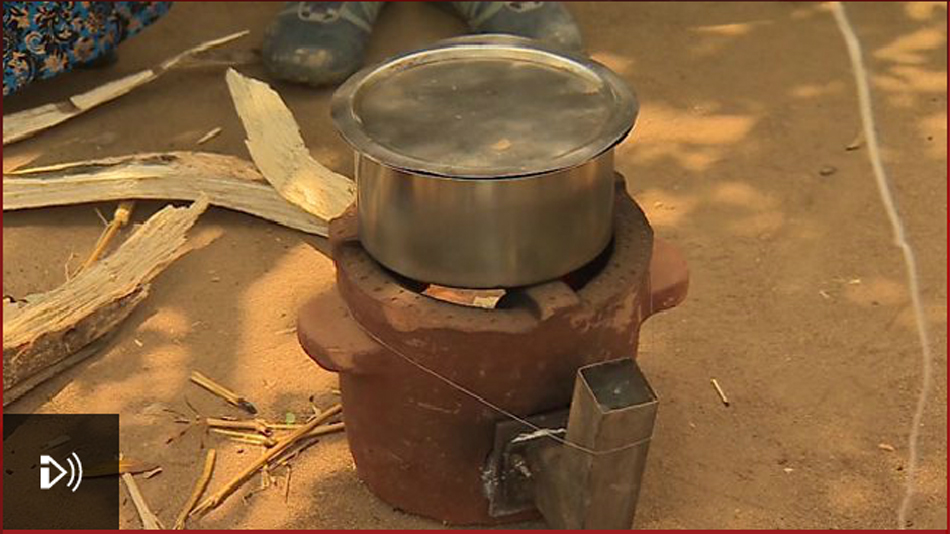
AMAZING: This is how to charge your Phone with a mud oven [VIDEO]


Recently BBC World Service released a shocking video that proved mobile phones can be charged over fire built with mud oven. As incredible as this sounds, there is a video to back it up.

Tackling climate change is a global issue and in the run up to the UN climate change conference in Paris most of the world's countries have put forward proposals to do their bit. In the second of this series Roger Harrabin looks at the solutions to the emissions problem. How can the world meet the need for energy for a growing population without creating dangerous levels of CO2 emissions?

Roger from BBC World Service traveled to Malawi, where the energy crisis is about access to energy. How do you provide energy to people like these without adding to the climate problem caused by the rich getting rich? 

Watch video below:

Learn more »

Miss Africa EMU 2016 Beauty Pageant: Application Forms NOW AVAILABLE!


The search is on for the most beautiful African girl in EMU! Are you an African girl, smart, bold & beautiful? Do you think you have what it takes to be crowned the next Miss EMU Africa.

However, if you feel you are not 'the one' explained above and know someone who fits the description, get the information across to them.

APPLICATION FORMS NOW AVAILABLE. CLICK HERE TO APPLY ONLINE

Miss Africa EMU 2016 Beauty Pageant application form is now available at the EMU International office. You can get it there, fill the form and return it back to the EMU International Office or to any of the Africa Society representative.

Deadline for form submission is on the 25th of April 2016.

DATE OF EVENT is on the 2nd of May 2016.

The winner of the Pageant and runner ups are expected to go home with amazing prizes.


*Follow updates on FACEBOOK
...................................................

***Proudly supported by Scanty Gela Blog

Learn more »

_

RealTalk Undressed